Executive summary
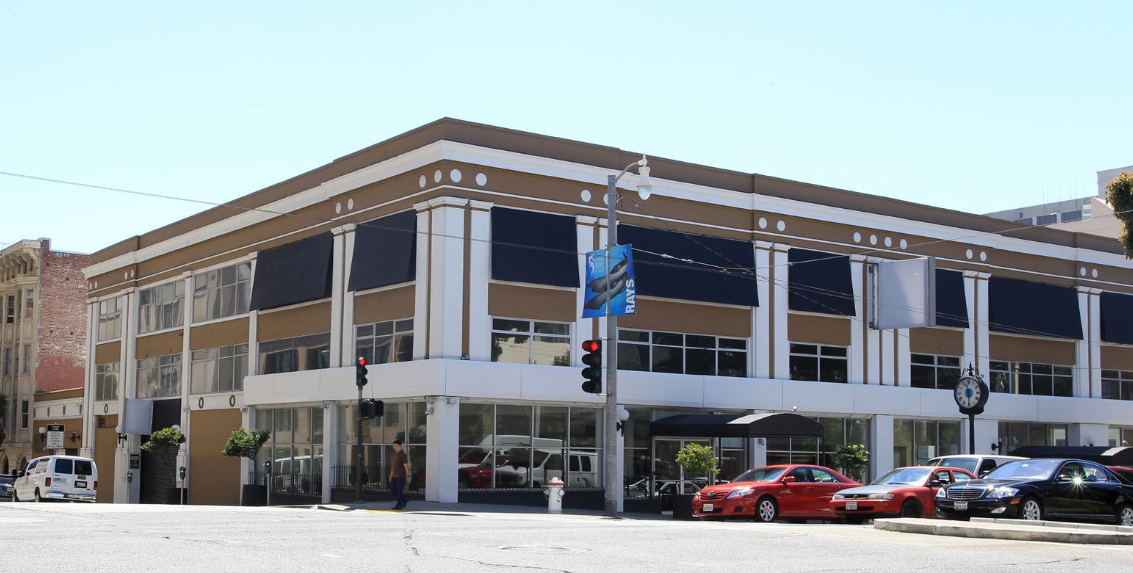
- Central location: Fast access to Downtown, Hayes Valley, Nob Hill, Japantown, SOMA, and northern neighborhoods.
- Transit-led positioning: Van Ness Bus Rapid Transit (BRT) materially improved corridor mobility, reliability, and safety.
- Residential precedent: Nearby product like 100 Van Ness, 150 Van Ness, and Opera Plaza proves the corridor already works for housing.
- Institutional anchors: Healthcare, education, and civic uses support steady daily demand.
- Redevelopment story: The site reads as a legacy auto use in a corridor increasingly aligned with residential and mixed-use redevelopment.
Property positioning
Public references identify 950 Van Ness as a former Mercedes-Benz / auto-oriented property on the Van Ness corridor. That matters because the site reads like a leftover auto use in a corridor that now makes more sense as a residential and mixed-use address.
Current read
- Automotive / dealership identity on a high-visibility corner.
- Legacy low-intensity use on a major urban corridor.
- RC-4 zoning already anticipates high-density residential mixed with active ground floors.
Redevelopment logic
- Two-story, 44,000-SF structure on 0.37 acres presents an immediate intensity gap versus neighboring multifamily product.
- Owner-user (Academy of Art University) control means no multi-tenant lease-down is required before construction.
- Corner frontage on Van Ness, O’Farrell, and Olive delivers 300+ feet of exposure for future residential or mixed-use podium programming.

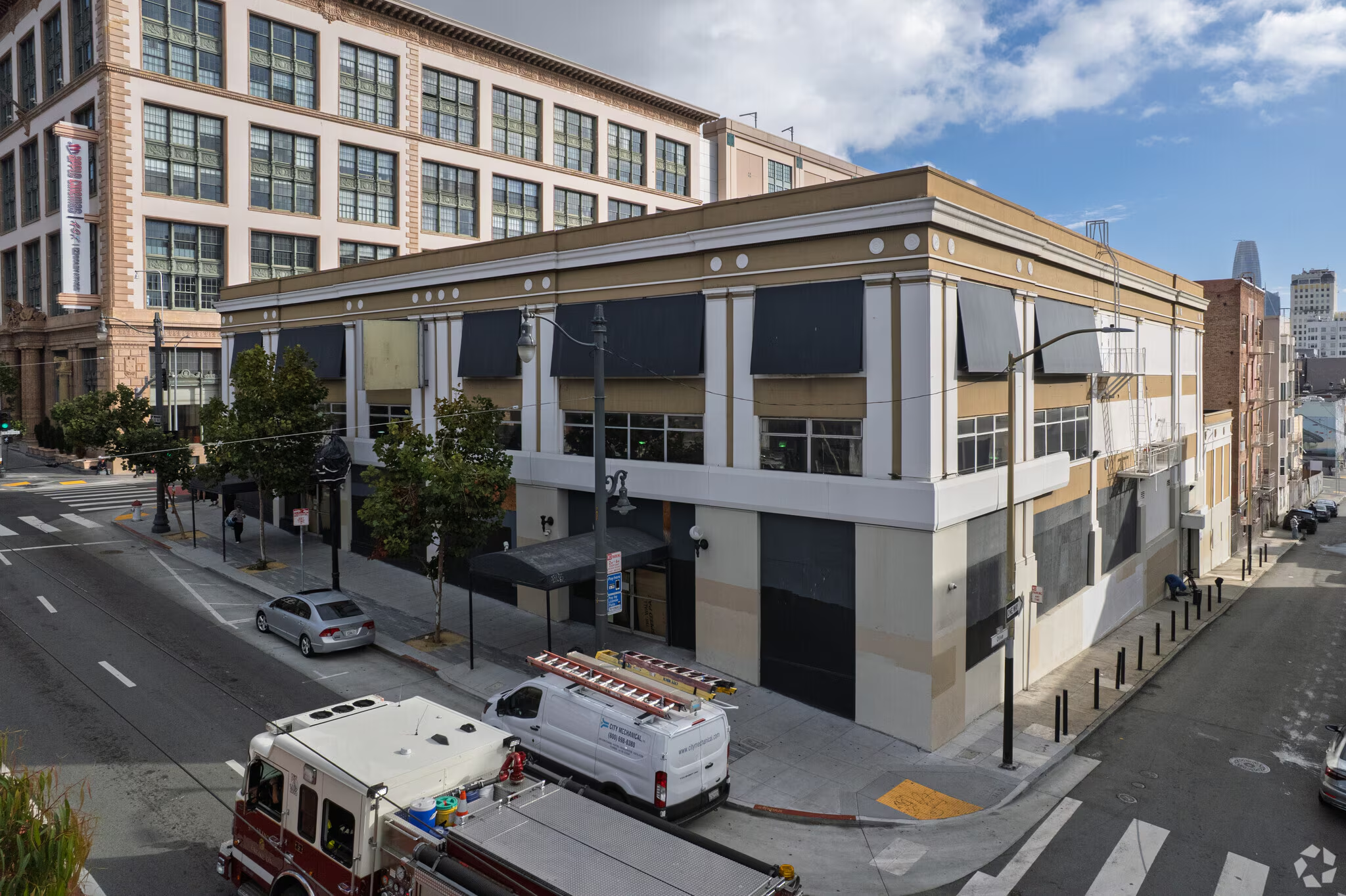
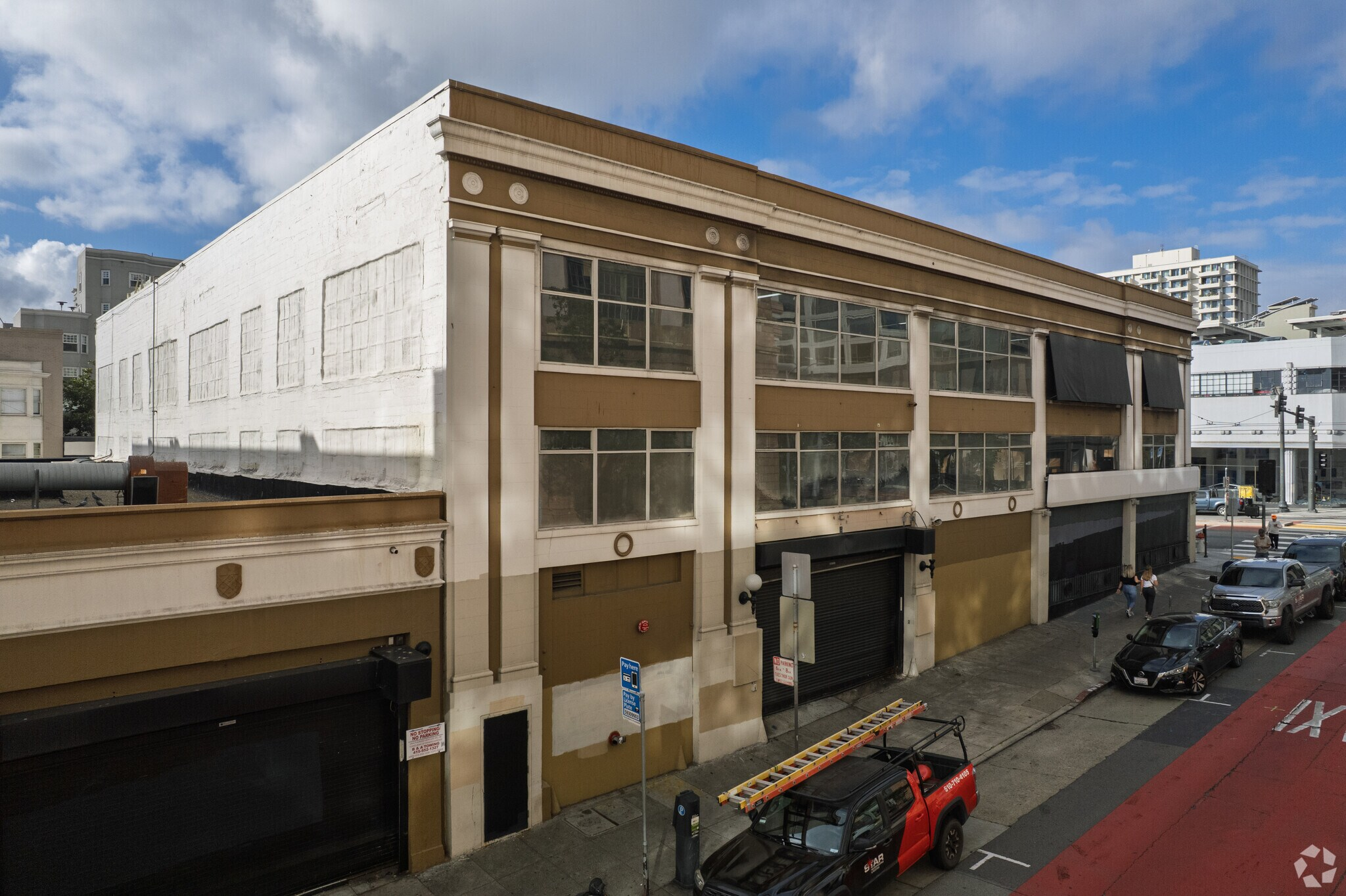
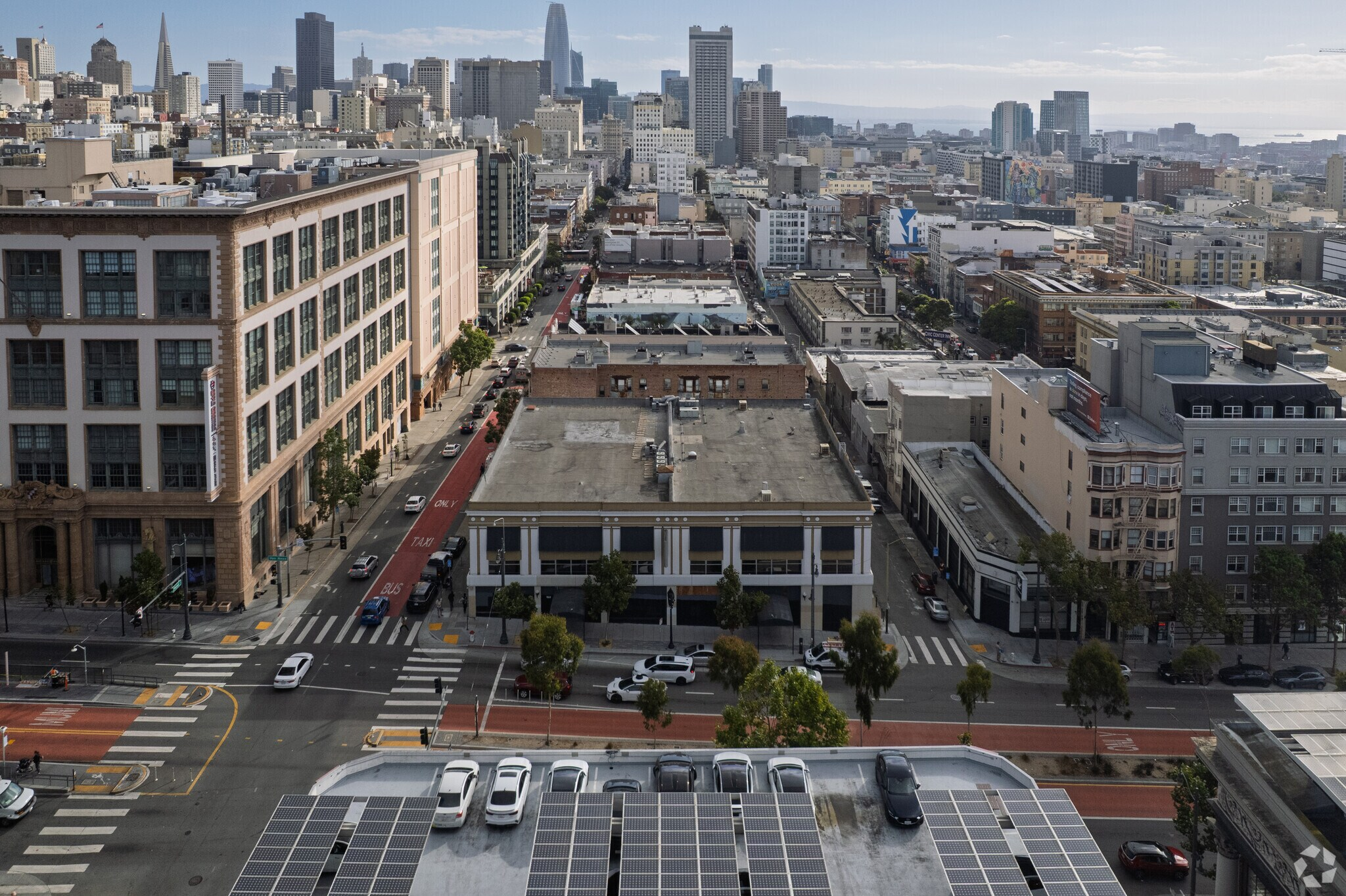
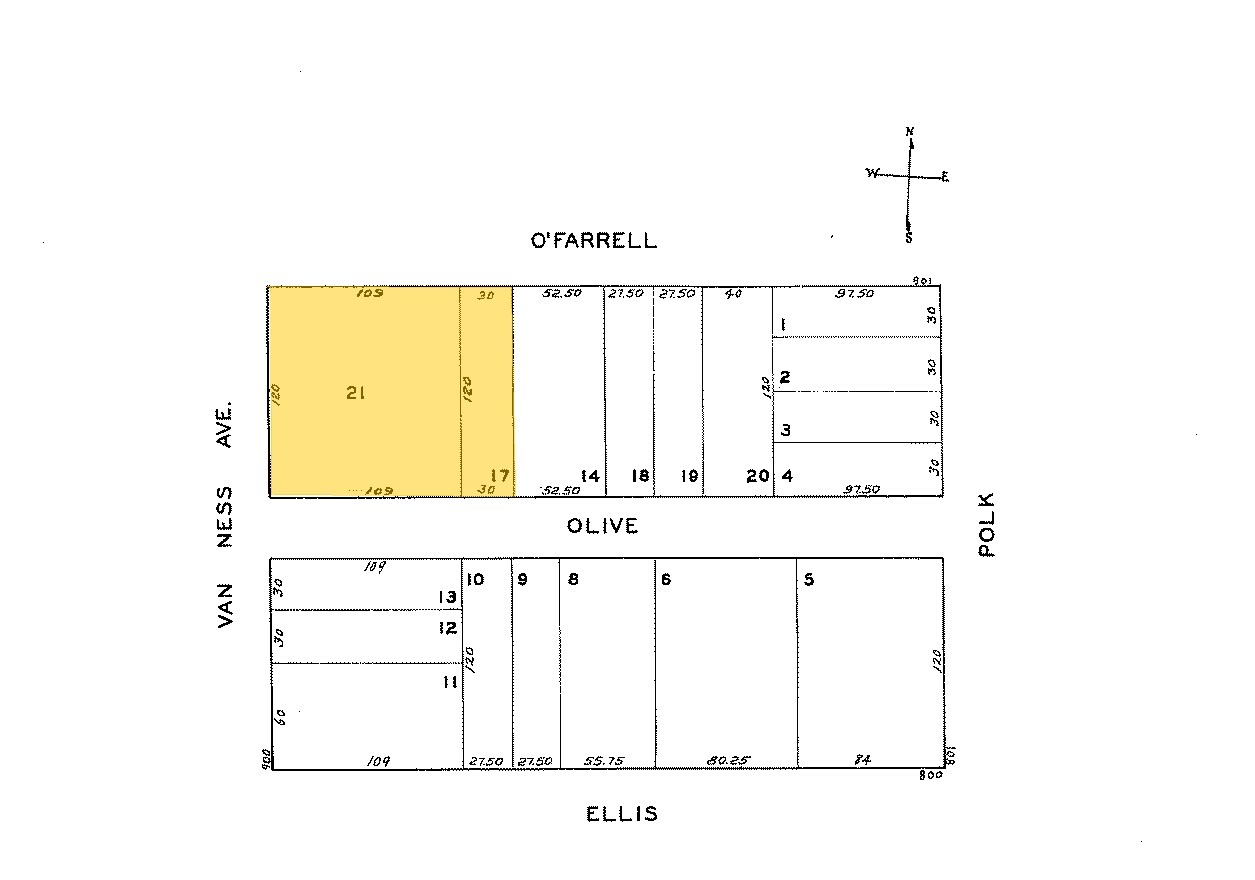
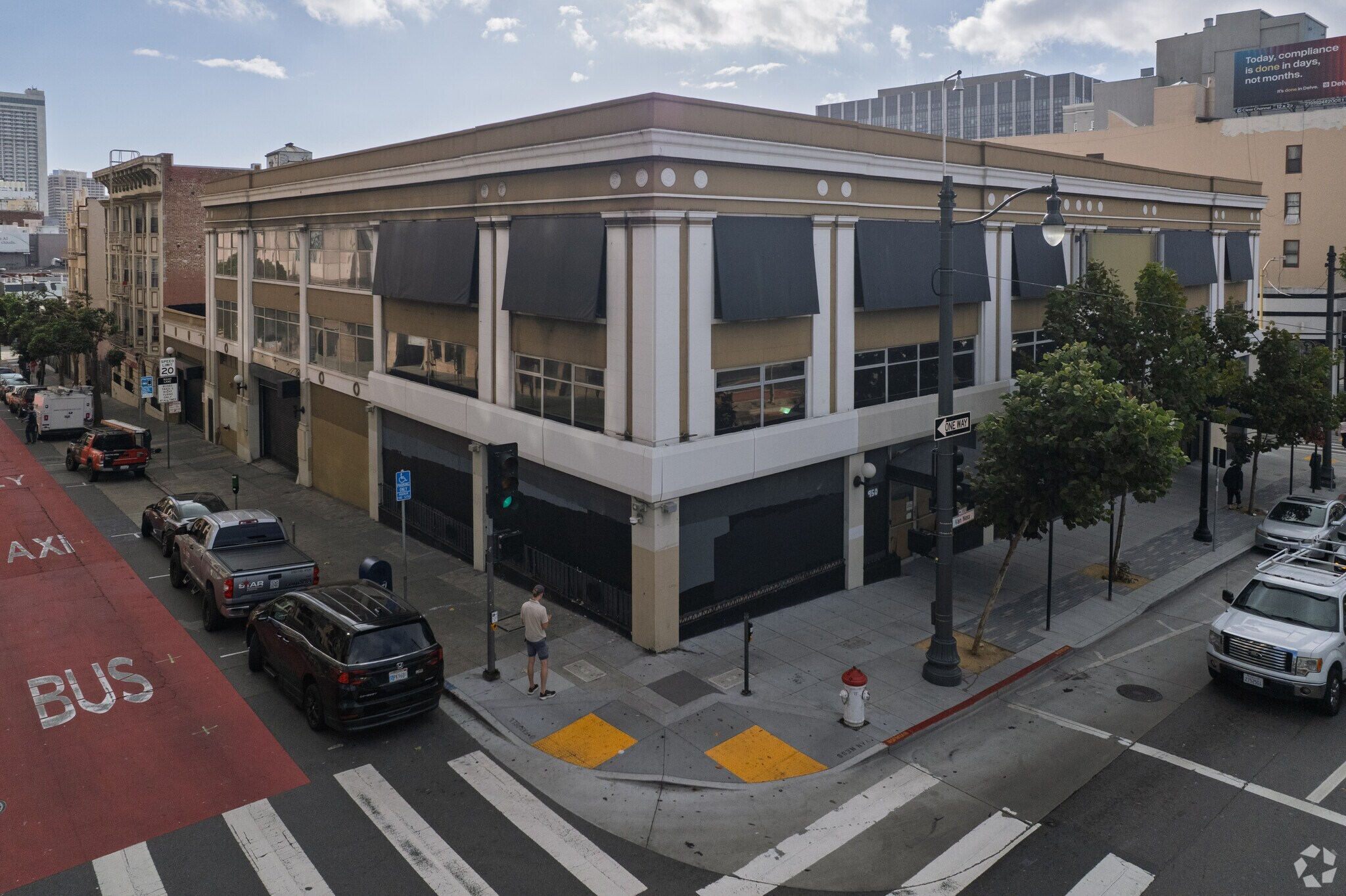
Investment view: repositioning replaces a low-density auto showroom with residential density that already aligns with RC-4 controls, the Family Zoning Plan, and Van Ness Area Plan objectives.
Source: CoStar property detail (download dated Mar 18, 2026). Confirm lot, entitlement, and tenant conditions directly with San Francisco Planning and recorded documents during diligence.
Why this location works for residential
Centrality
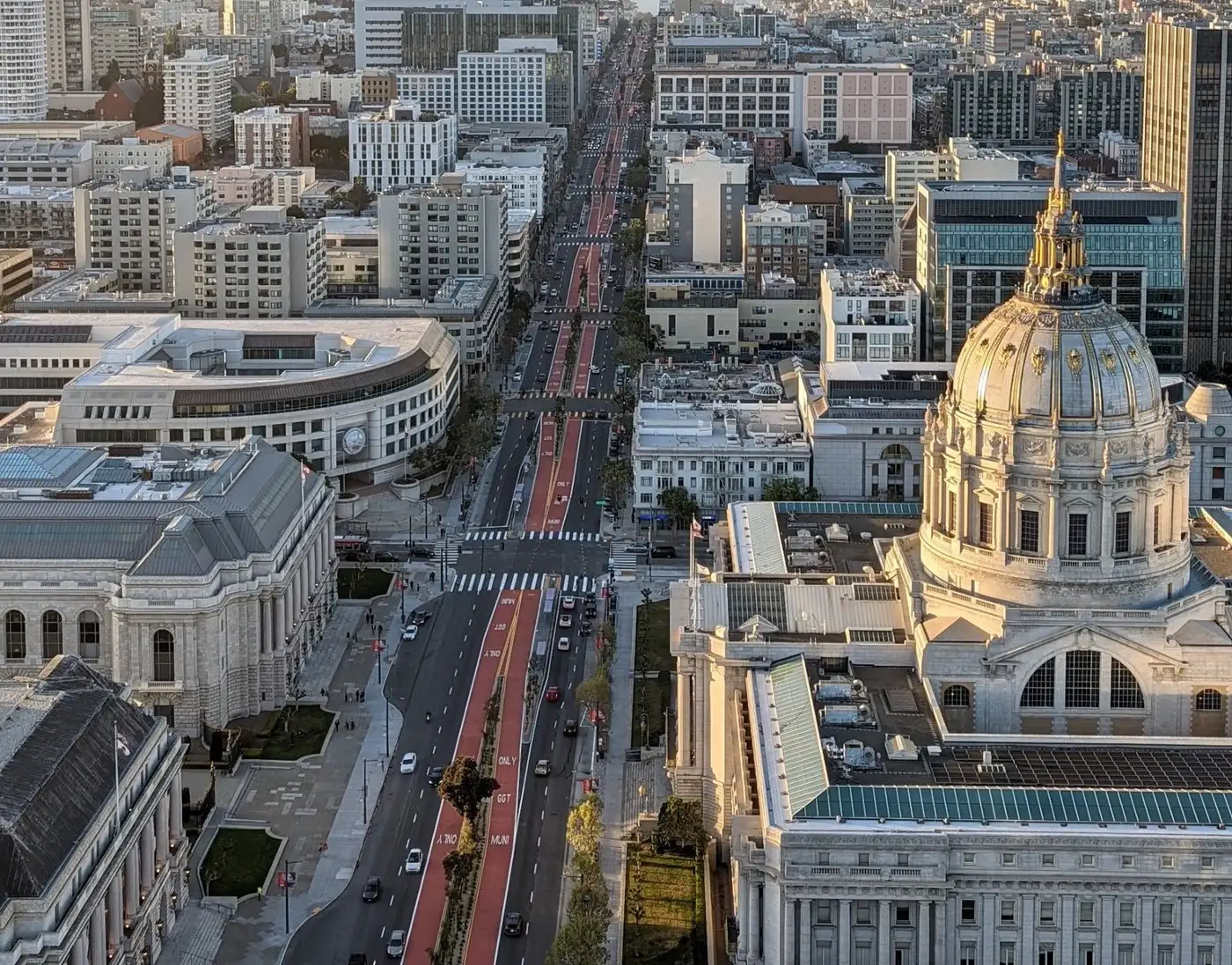
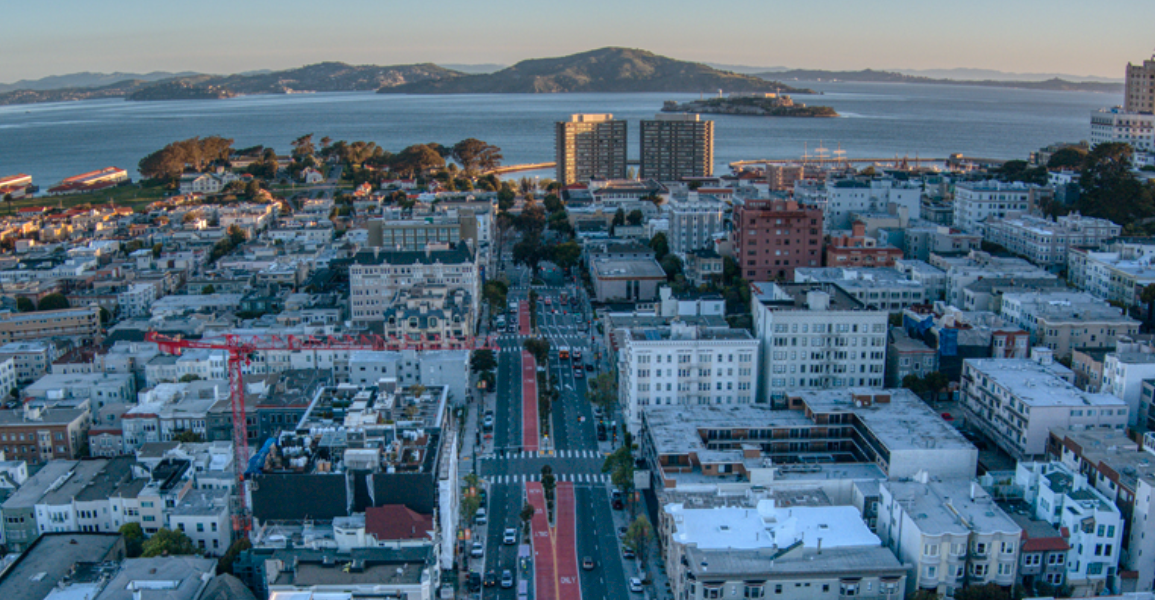
Van Ness is one of the city’s main north-south corridors. From 950 Van Ness, residents can reach Downtown, Civic Center, Hayes Valley, Polk Street, Nob Hill, and Japantown with relative ease. That kind of access is one of the clearest reasons housing works here.
Transit access
950 Van Ness benefits from strong regional and city transit connectivity. The property sits on one of San Francisco’s main north-south corridors, with convenient access to Muni service, downtown transit connections, and BART via the Powell Street station area. In addition, corridor transit improvements along Van Ness have improved reliability, travel times, and pedestrian safety.
- Approx. 0.71 miles to Powell Street BART
- Strong north-south transit access along Van Ness
- Convenient connections south to Market Street and regional job centers
- Improved safety and walkability along the corridor
Mobility scorecard: Walk Score 90, Transit Score 100 (WalkScore.com) reinforce how embedded the site is within the urban core.
Institutional strength
The corridor benefits from major civic, healthcare, and educational anchors that support daily activity and residential demand. This is not just a future story. The surrounding institutions already generate steady foot traffic and make the location easier to justify as housing.
Zoning & policy alignment
San Francisco’s current policy environment actively encourages higher-density, mixed-use housing on the Van Ness corridor. The newly adopted Family Zoning Plan and the long-standing Van Ness Avenue Area Plan both call for exactly the kind of residential replacement envisioned for 950 Van Ness.
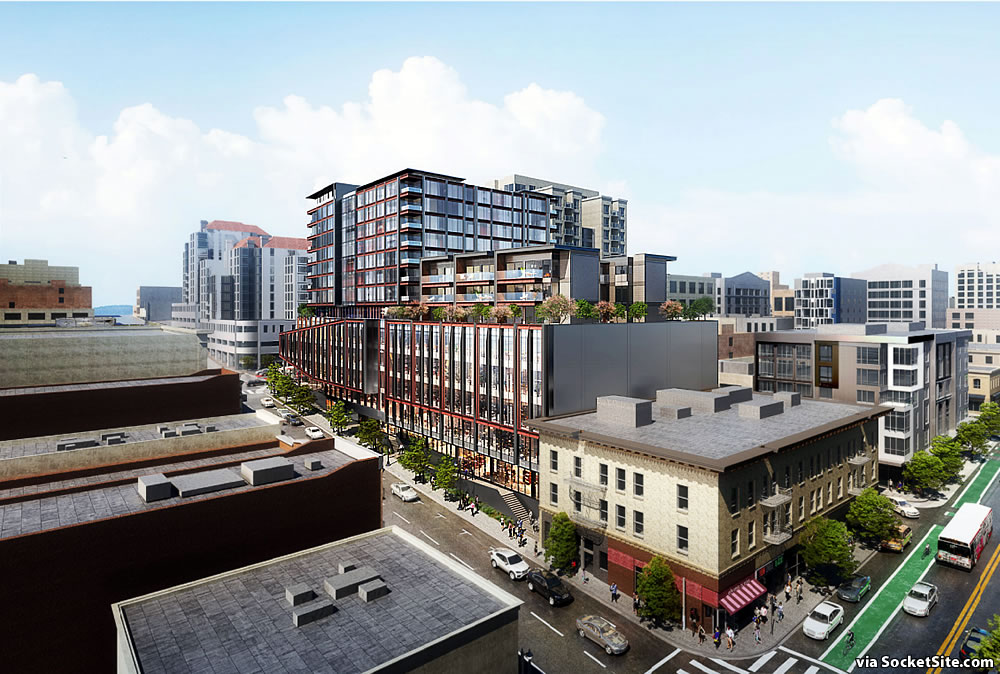
Family Zoning Plan (2025)
- Approved December 12, 2025 (effective January 12, 2026) after a multi-year, equity-centered outreach process.
- Expands housing options in neighborhoods with superior transit, parks, retail, and services so more families can live near opportunity.
- Key goals include reversing segregation, adding new neighbors and resources, coordinating growth with infrastructure, and delivering more affordable, diverse housing types.
Source: San Francisco Family Zoning Plan (sfplanning.org)
Van Ness Avenue Area Plan
- Objective 1 calls for adding a “significant increment of new housing” along Van Ness because it is already a central, transit-served boulevard.
- Policy 1.1 encourages high-density housing above commercial podiums, while Policy 1.3 lets density be set by building volume instead of strict lot-area math.
- Policy 5.1 directs height controls that frame the wide avenue and support its role as a mixed-use, transit corridor; Policy 5.5 favors full-lot development to maximize units.
Source: San Francisco General Plan — Van Ness Avenue Area Plan (sfplanning.org)
Takeaway: the corridor already has policy support for replacing auto-oriented parcels with dense housing, provided projects deliver active ground floors, respect the streetwall, and coordinate with transit and streetscape upgrades. 950 Van Ness sits squarely inside the geography the City wants to see transition into a residential boulevard.
Risks / watchpoints
- Immediate tract income is below the citywide average, so rent and product assumptions should emphasize value relative to core San Francisco benchmarks.
- Perception issues along the Civic Center / Tenderloin edge persist; plan for enhanced onsite management, activation, and communications to keep the corridor experience aligned with Van Ness investments.
- Submarket vacancy and rent levels still trail the broader metro despite progress—phase underwriting to reflect conservative lease-up and rent-growth curves.
- Only eight transactions (~$40M) closed in the past 12 months, so valuation support and financing comps are thinner than in top-tier institutional submarkets.
- Confirm parcel data, RC-4 controls, height/bulk allowances, and Academy of Art occupancy timelines directly with Planning and the OM before locking a development program.
Demographic snapshot
The property geocodes to Census Tract 122.02 in San Francisco County. The tract data points to a mature, urban, renter-heavy population with incomes below the citywide average, but still with a meaningful college-educated resident base and a dense apartment market.
| Metric | Civic Center / Tenderloin | San Francisco city | Takeaway |
|---|---|---|---|
| Total population | 3,017 | 836,321 | Dense urban neighborhood context |
| Median age | 46.2 | 39.7 | Area skews more mature than city overall |
| Median household income | $54,650 | $141,446 | Mixed-income / workforce-oriented immediate context |
| Total housing units | 1,702 | 411,542 | Strong multifamily context |
| Owner-occupied units | 178 | 139,610 | Low ownership in immediate tract |
| Renter-occupied units | 1,310 | 223,040 | Strong renter profile, supportive for rental product |
| 25+ with bachelor’s degree | 630 | 234,704 | Educated urban resident base |
| 25+ with bachelor’s+ degree | 892 | 402,351 | Meaningful educational attainment locally |
The immediate tract is not one of San Francisco’s highest-income pockets. Even so, it already supports dense residential living. A well-executed project could draw a stronger renter or buyer profile by leaning into location, transit access, healthcare adjacency, and newer product quality.
Civic Center / Tenderloin multifamily submarket
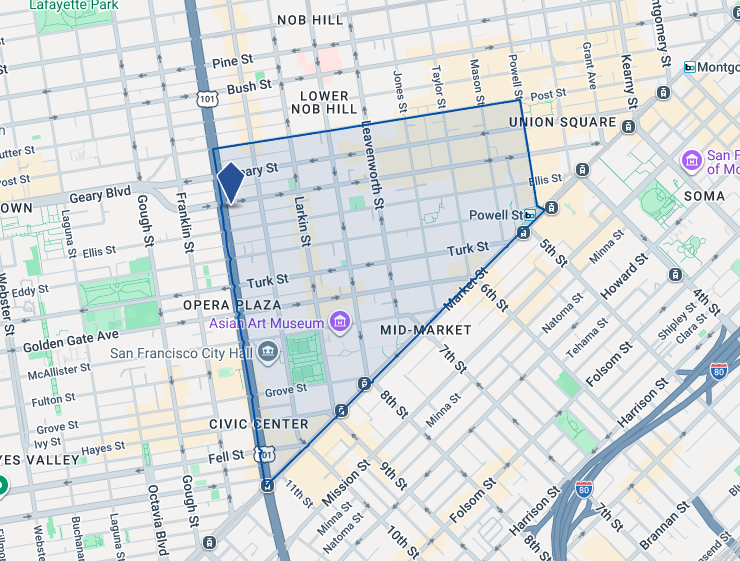
The CoStar submarket report confirms that the location story is not just about neighborhood amenities. The surrounding multifamily market itself has been improving. Civic Center / Tenderloin entered 2026 with tighter vacancy, rising rents, and no recent new deliveries, which has helped existing product regain pricing power.
| Metric | Submarket | San Francisco market | Read-through for 950 Van Ness |
|---|---|---|---|
| Inventory units | 11,184 | 190,858 | Established multifamily base |
| Vacancy rate | 5.5% | 4.3% | Still above metro, but moving in the right direction |
| Vacant units | 610 | 8.1K | Leasing risk exists, but availability has improved |
| Asking rent / unit | $2,591 | $3,435 | Discount supports affordability-oriented demand |
| Effective rent / unit | $2,575 | $3,414 | Minimal gap suggests concessions are manageable |
| Concession rate | 0.6% | 0.6% | In line with broader market |
| Under construction units | 0 | 2,939 | No active competing supply in the submarket |
| 12-mo delivered units | 0 | 1,584 | Existing assets benefit from limited competition |
| Market sale price / unit | $370K | $537K | Lower basis than metro may appeal to value-oriented buyers |
| Market cap rate | 4.8% | 4.5% | Slightly higher yield than the metro overall |
| 12-mo sales volume | $33.3M | $2.7B | Liquidity exists, though thinner locally |
| 12-mo transactions | 8 | 425 | Limited depth, but not a frozen market |
CoStar also notes roughly 11,000 market-rate units and about 4,000 affordable units in the submarket, with no new deliveries or construction starts over the last year. That supply pause matters. It gives existing and future projects more room to lease without competing against a wave of brand-new inventory.
Broader San Francisco multifamily market
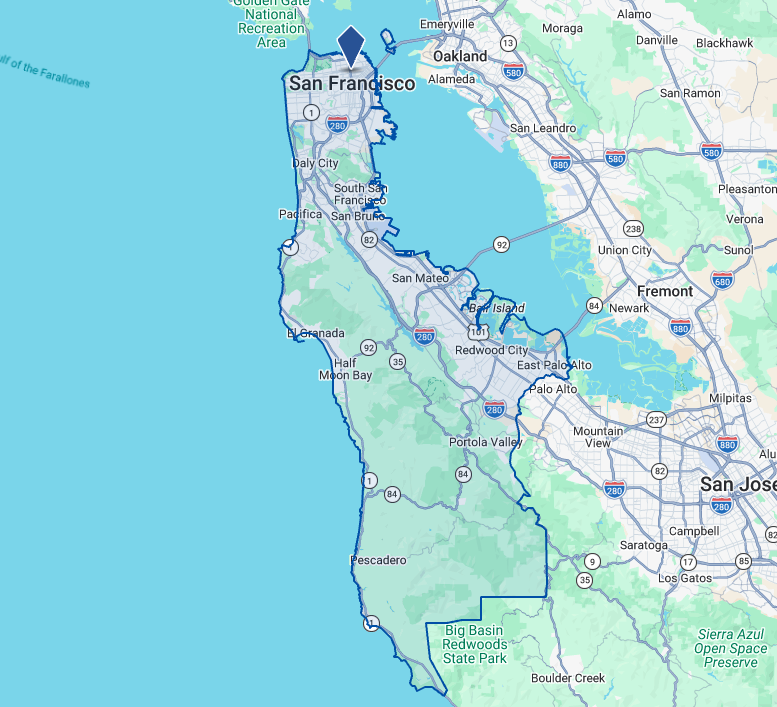
The citywide CoStar report makes the local story more compelling. San Francisco’s multifamily market entered 2026 with strong fundamentals: vacancy has fallen to 4.3%, asking rents have reached roughly $3,435 per unit, annual rent growth is running well ahead of many major U.S. markets, and supply remains constrained relative to demand.
| Metric | San Francisco | National | Why it matters |
|---|---|---|---|
| Vacancy rate | 4.3% | 8.6% | San Francisco is materially tighter than the national average |
| Asking rent / unit | $3,435 | $1,770 | Major premium to the national market |
| Effective rent / unit | $3,414 | $1,749 | Limited discounting |
| Concession rate | 0.6% | 1.2% | Lower concessions than national norms |
| Market sale price / unit | $537K | $233K | Investors still price SF multifamily at a major premium |
| Market cap rate | 4.5% | 6.1% | Lower cap rates reflect stronger long-term expectations |
| Median household income | $154,217 | $84,512 | High income base supports premium rents |
| 12-mo absorption units | 3,045 | 395,305 | Demand is still positive despite cost |
| Under construction units | 2,939 | 551,407 | Construction exists but remains historically subdued for SF |
CoStar’s citywide narrative highlights several themes that help position 950 Van Ness: downtown-oriented neighborhoods are recovering, return-to-office activity improves daily relevance for central locations, and hiring tied to tech and AI has brought higher-income renters back into the market. At the same time, high construction costs, complex entitlements, and financing constraints keep supply muted.
For 950 Van Ness, the takeaway is simple: the property sits in a submarket that is improving, inside a metro that is already outperforming the national apartment market on vacancy, rents, concessions, and pricing.
Target demand profile

- Young professionals who want central access without depending on a car
- Medical professionals and healthcare staff given proximity to CPMC and related medical offices
- Graduate students / faculty / education-adjacent residents tied to nearby institutions and city access
- Urban empty nesters / downsizers who value convenience, culture, and healthcare access
- International and domestic renters who prioritize a recognizable, central San Francisco address with transit and services
- Lifestyle-driven residents who want quick access to dining, arts, shopping, and multiple neighborhoods
- Affordability-conscious renters who want a central location at rents below the broader San Francisco average
Amenities & distances
Schools / education
- Elementary: Tenderloin Community School (0.17 mi), Redding Elementary School (0.38 mi)
- Middle: DeMarillac Academy (0.44 mi)
- High school: Sacred Heart Cathedral Preparatory (0.15 mi), Stuart Hall High School (0.47 mi)
- College: Academy of Art University programs nearby
Healthcare
- CPMC Van Ness Campus (0.15 mi)
- Opera Plaza / nearby medical-office concentration (0.17 mi)
- Civic Center area (0.46 mi)
Places of worship
- Saint Mark’s Lutheran Church (0.12 mi)
- First Unitarian Universalist Church (0.16 mi)
- Hamilton Square Baptist Church (0.62 mi)
- Trinity Episcopal Church (0.35 mi)
- Saint Gregory of Nyssa Episcopal Church (1.78 mi)
- Al Tawheed Mosque (0.33 mi)
Retail / grocery
- Whole Foods Market (0.44 mi)
- Trader Joe’s (0.48 mi)
- Nijiya Market / Japan Center area (0.54 mi)
- Opera Plaza (0.17 mi)
- Polk Street corridor (approx. 0.3–0.5 mi)
- Powell Street BART (0.71 mi)
Residential precedent & investor positioning
The strongest argument for residential redevelopment is simple: this corridor already works as a residential address. Investors are not being asked to create demand from scratch. They are stepping into a location where the residential case has already been validated by surrounding product, public investment, and ongoing neighborhood evolution.
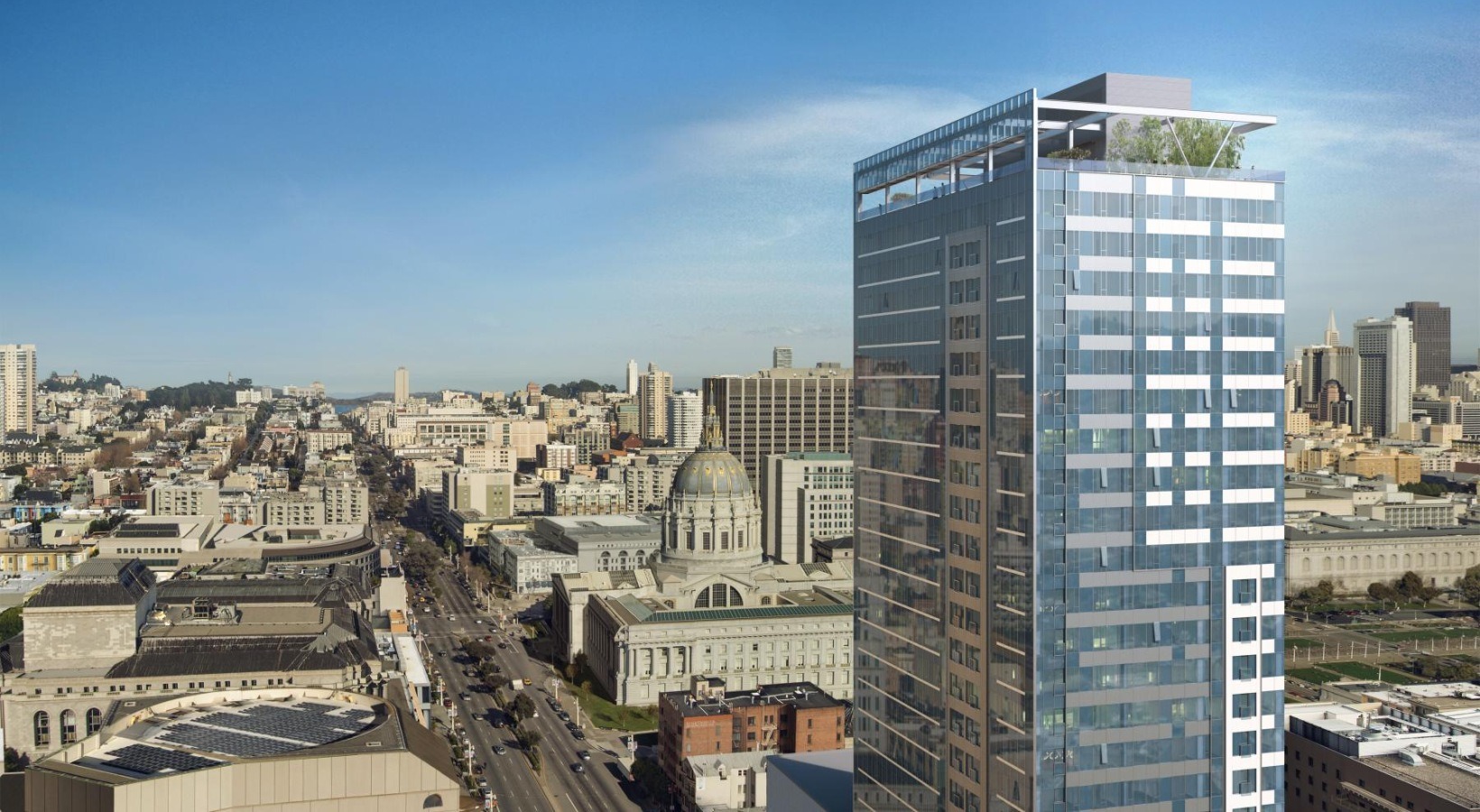
A widely cited adaptive-reuse success story that converted a former office tower into apartments.
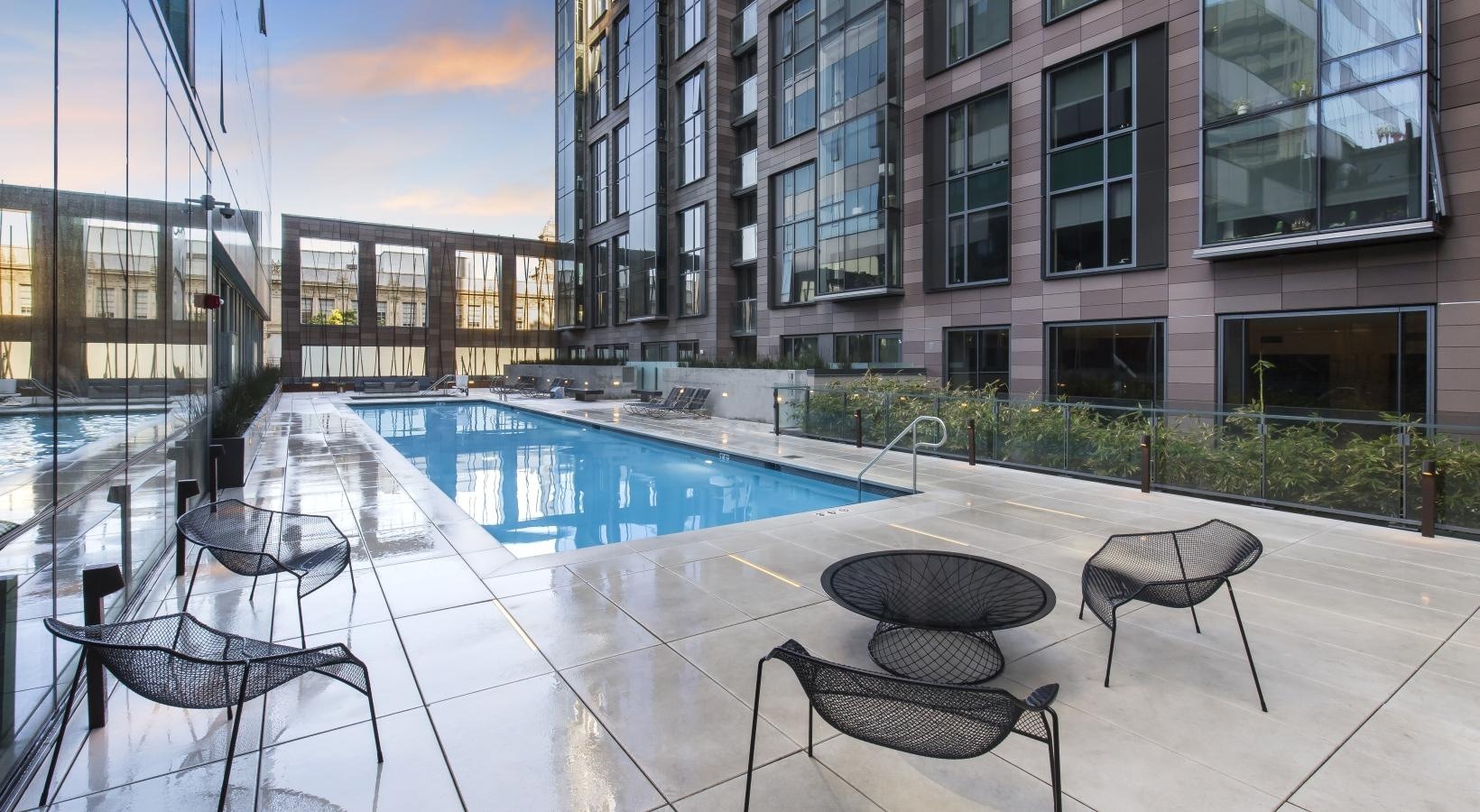
Contemporary multifamily product reinforcing the corridor’s appeal as a residential address.
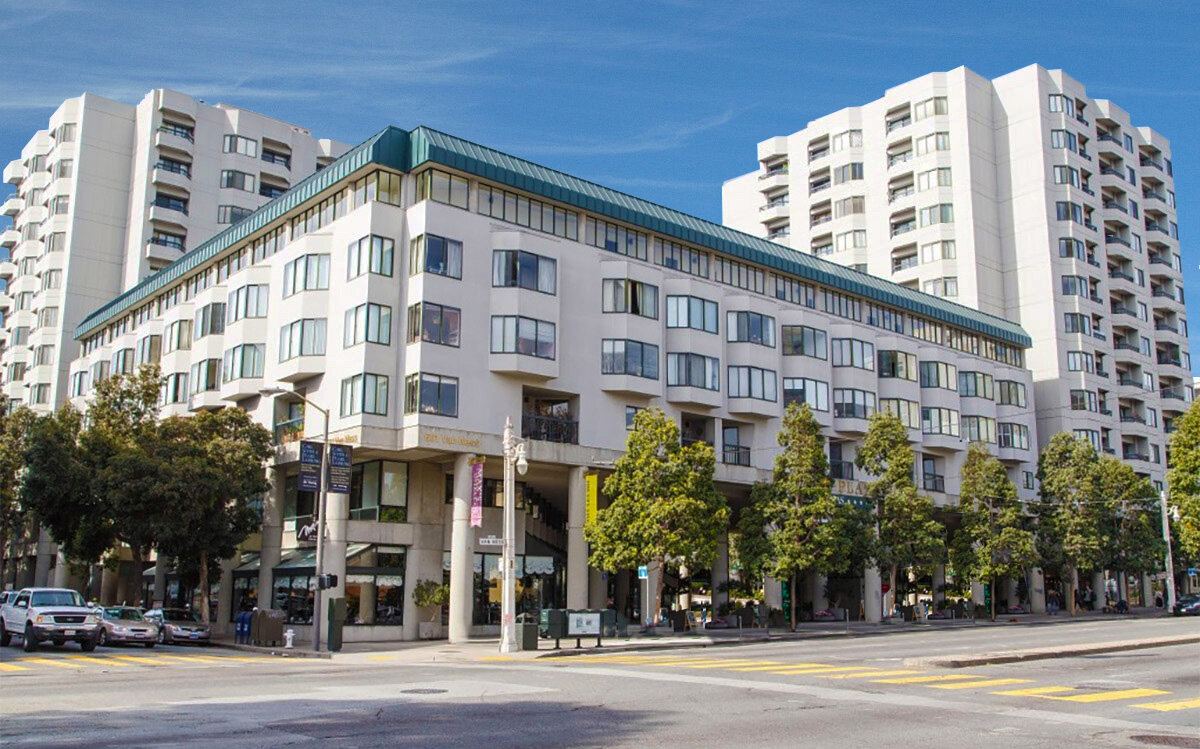
Longstanding mixed-use and residential presence that supports the district’s established housing identity.
- 100 Van Ness shows the market’s acceptance of residential conversion and repositioning in this broader corridor.
- 150 Van Ness confirms current multifamily demand for well-located Van Ness product.
- Opera Plaza demonstrates that the area has supported residential, retail, and cultural activity for decades.
Van Ness has long been wide, prominent, and in places overly car-oriented, but city policy and public investment have been pushing the corridor in a different direction: safer streets, better transit, a stronger mixed-use identity, and a more housing-friendly pattern of development.
- The San Francisco General Plan frames Van Ness as a major mixed-use boulevard and transit corridor.
- Public investment along the corridor signals long-term institutional support.
- Nearby adaptive-reuse and apartment projects show that private capital has already validated the residential thesis.
- Legacy automotive uses increasingly feel underutilized relative to the corridor’s centrality and infrastructure.
Methodology & sources
This interactive page is based on the final research document and reorganized for easier navigation and presentation.
- Client-provided Offering Memorandum (OM) for 950 Van Ness Ave
- CoStar Civic Center / Tenderloin multifamily submarket report
- CoStar San Francisco multifamily market report
- U.S. Census Bureau, 2023 ACS 5-Year Profile tables
- San Francisco General Plan: Van Ness Avenue
- SFMTA: Van Ness Bus Rapid Transit materials
- Sutter Health / CPMC Van Ness Campus public information
- OpenStreetMap / Overpass nearby amenity mapping
- Public project and neighborhood references for 100 Van Ness, 150 Van Ness, Opera Plaza, Polk Street, and Japantown / Japan Center
Design note: sections are separated into tabs so the report is easier to review live with a client, share internally, or adapt into a polished presentation later.